- Archaeology
The hand stencil is more than 1,000 years older than the previous earliest evidence of rock art.
When you purchase through links on our site, we may earn an affiliate commission. Here’s how it works.
 The faint outline of a handprint (above the dark bird figure) in the Liang Metanduno cave in Sulawesi is the oldest known rock art in the world.
(Image credit: Maxime Aubert)
Share
Share by:
The faint outline of a handprint (above the dark bird figure) in the Liang Metanduno cave in Sulawesi is the oldest known rock art in the world.
(Image credit: Maxime Aubert)
Share
Share by:
- Copy link
- X
Scientists have identified the world's oldest known rock art — a hand stencil created at least 67,800 years ago in Indonesia.
This artwork, nestled in a cave in southeast Sulawesi, is also the earliest archaeological evidence of modern humans (Homo sapiens) living on the islands between the Asian and Australian continental shelves, according to a study published Wednesday (Jan. 21) in the journal Nature. The hand stencil is surrounded by younger rock art, including another hand stencil.
You may like-
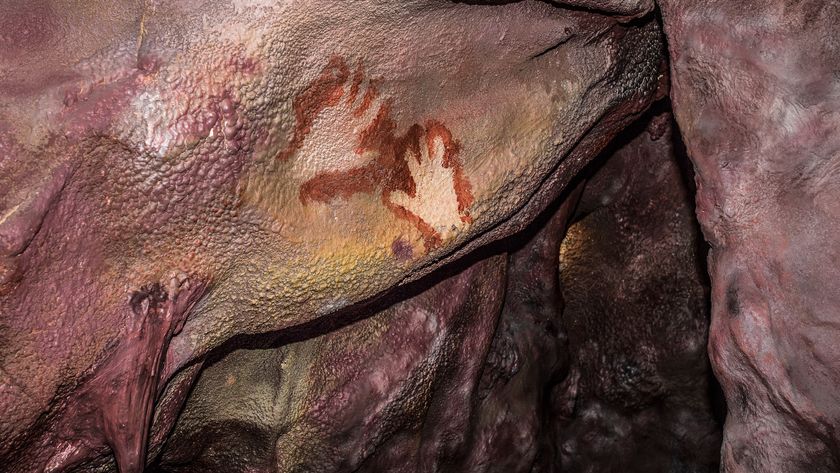 'The images could be much older': Analysis of rocks shows Neanderthals made art at least 64,000 years ago
-
 Ancient rock art along US-Mexico border persisted for more than 4,000 years — and it depicts Indigenous views of the universe
-
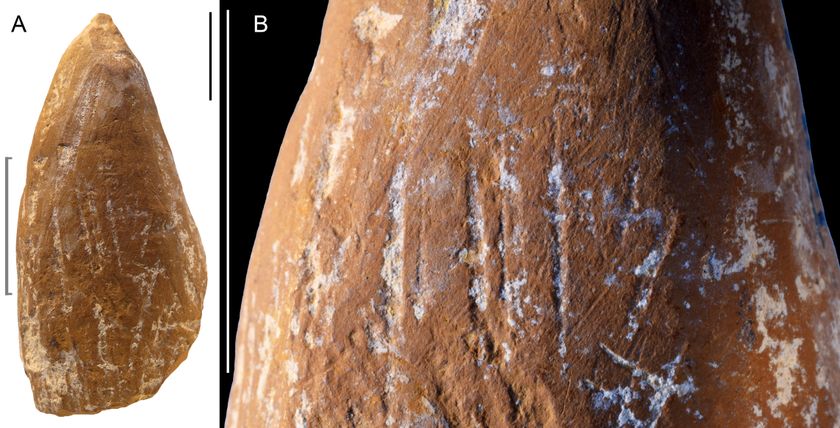 Crimean Stone Age 'crayons' were used by Neanderthals for symbolic drawings, study claims
Although the rock art's original meaning is unknown, the hand stencils hint that the artists belonged to a relatively large group with its own cultural identity, study co-author Maxime Aubert, an archaeologist and geochemist at Griffith University in Australia, told Live Science. The hand stencils could have been made to signify group membership, Aubert said. "If you know about that cave and you know about this rock art, you're part of that group, you're part of that culture," he said.
Prehistoric art
Prehistoric rock art — or art on a rock face like a cave wall or a rock shelter — has been discovered all around the world, from 12,000-year-old engravings in Saudi Arabia to 4,000-year-old paintings along the U.S.-Mexico border. The oldest dated rock art previously identified — a roughly 66,700-year-old hand stencil in Spain — was believed to have been made by Neanderthals, as current evidence suggests modern humans didn't reach Europe until 54,000 years ago. But the dating technique used for that discovery is debated.
However, humans have been creating art for even longer than these examples. The oldest known drawing is a 73,000-year-old hashtag on a stone from South Africa, and a 540,000-year-old shell with zigzag carvings from Indonesia may have been crafted by Homo erectus.
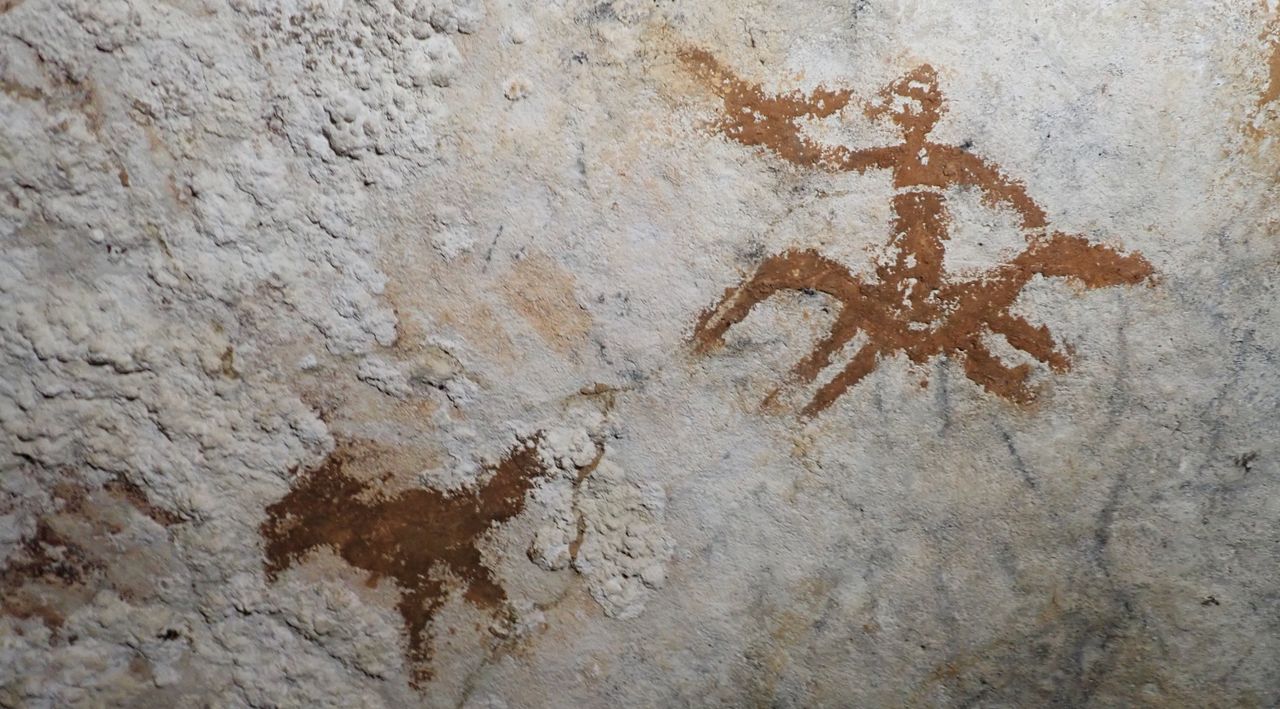
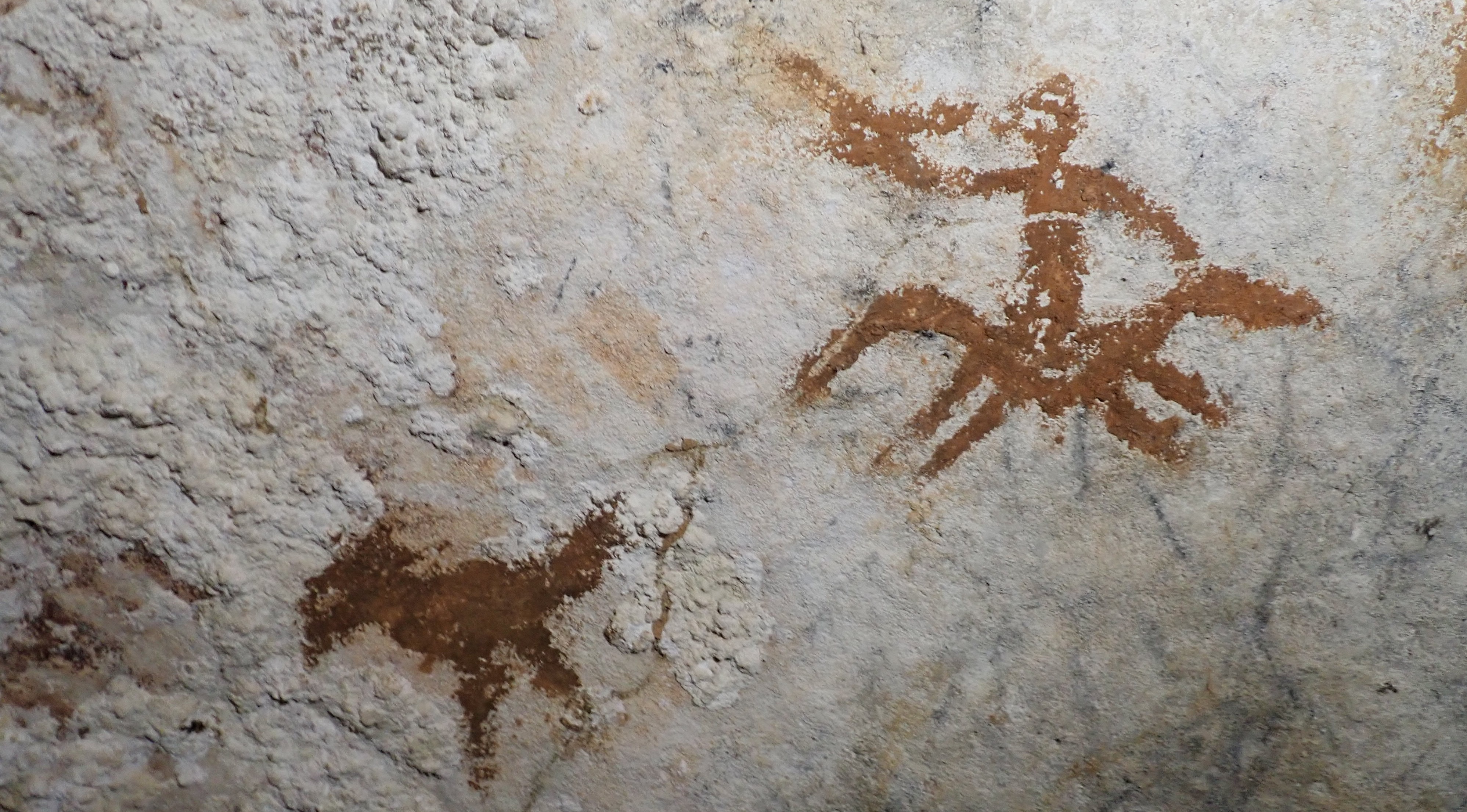
Sulawesi also has a longstanding artistic legacy, with a depiction of a human interacting with a warty pig dating to 51,200 years ago. As part of a broader project documenting the prehistoric artwork on Sulawesi, Aubert and his team inspected 11 designs found in eight caves: seven hand stencils, two human figures and two geometric patterns.
Sign up for the Live Science daily newsletter nowContact me with news and offers from other Future brandsReceive email from us on behalf of our trusted partners or sponsorsBy submitting your information you agree to the Terms & Conditions and Privacy Policy and are aged 16 or over.All these prehistoric works had lumps of calcium carbonate — called "cave popcorn" — growing over them. Because the cave popcorn must have developed after the artwork was created, dating these growths provides a minimum age for the underlying image. In a handful of instances, maximum ages could also be obtained as the pigment overlaid one of these mineral deposits.
During the project, the researchers dated one hand stencil, measuring 5.5 by 3.9 inches (14 by 10 centimeters), to at least 67,800 years ago, making it 1,100 years more ancient than the rock art linked to Neanderthals in Spain. The image has faded considerably, but the remains of the fingers and palm are still faintly visible. The fingers had been purposefully narrowed — an artistic technique only found in Sulawesi.
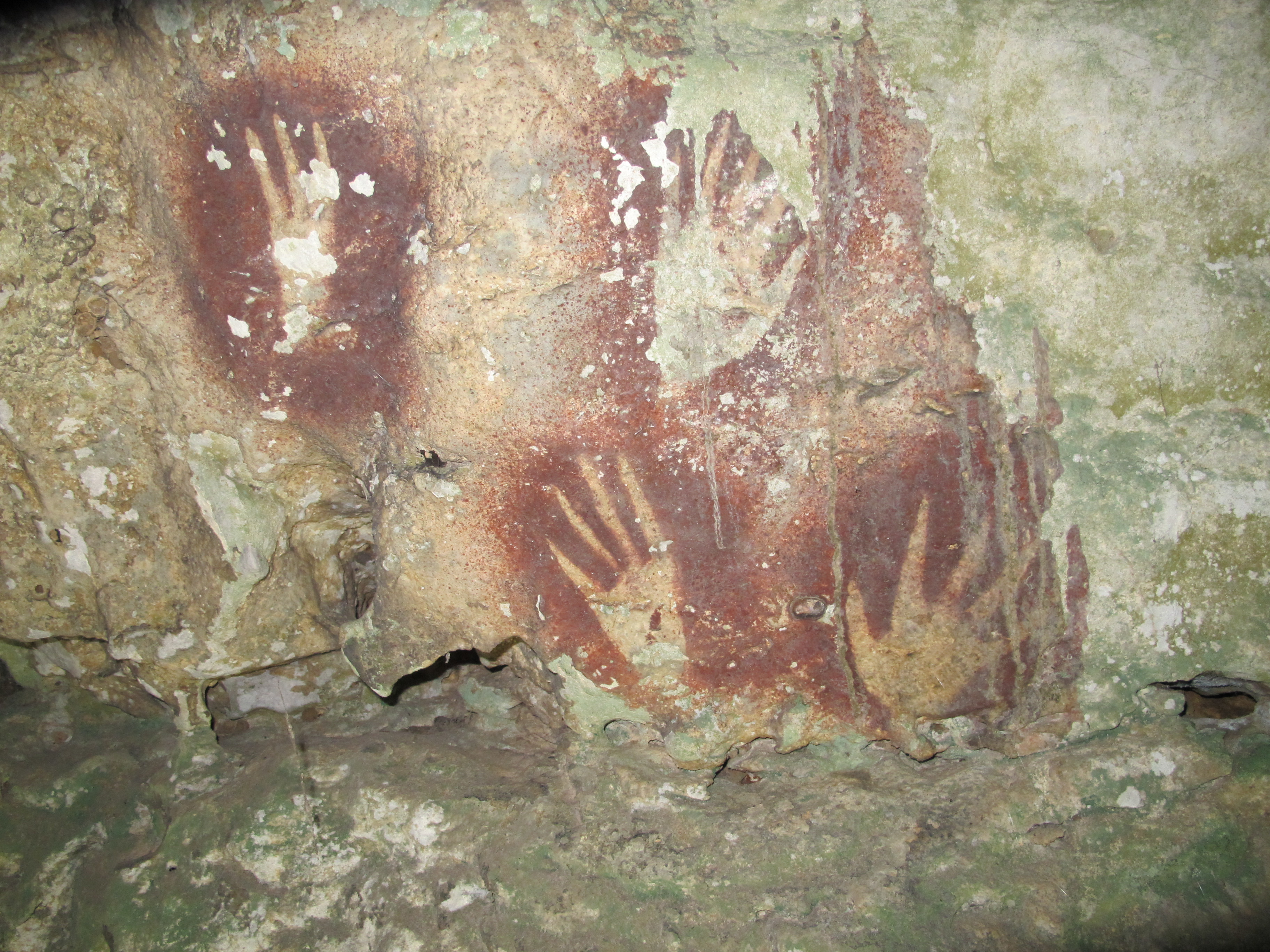
About 4.4 inches (11 cm) to the left of this artwork is a hand stencil created using darker pigment that dates to no older than 32,800 years ago. This shows that prehistoric humans used this cave as their canvas over a period of at least 35,000 years.
You may like-
Crimean Stone Age 'crayons' were used by Neanderthals for symbolic drawings, study claims
-
 'It is the most exciting discovery in my 40-year career': Archaeologists uncover evidence that Neanderthals made fire 400,000 years ago in England
-
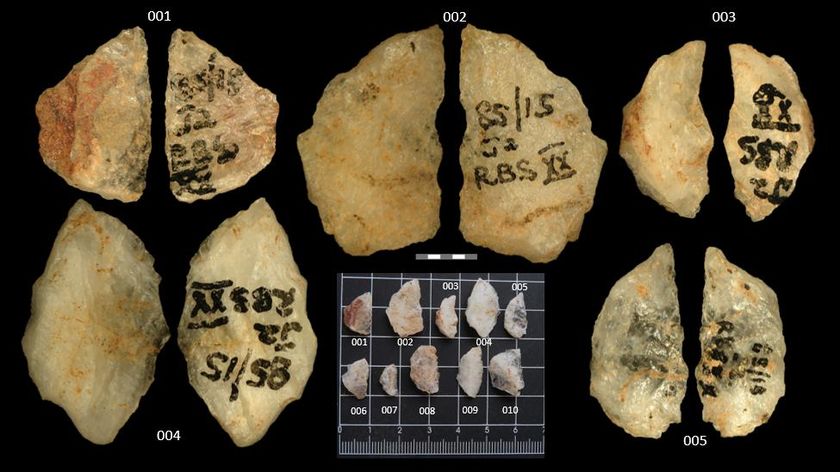 60,000-year-old poison arrows from South Africa are the oldest poison weapons ever discovered
Although other human species once called Sulawesi home, the researchers believe H. sapiens created these artworks, because the narrowed fingers are technically complex to produce and modern humans are known to have lived in the region at the time.
The stencils may have been created by the individuals spraying pigment over their hands with their mouths. This opens up the possibility for DNA to be extracted from the artwork. "We could have the genetic signature of the people doing this," Aubert said. "That would be amazing."
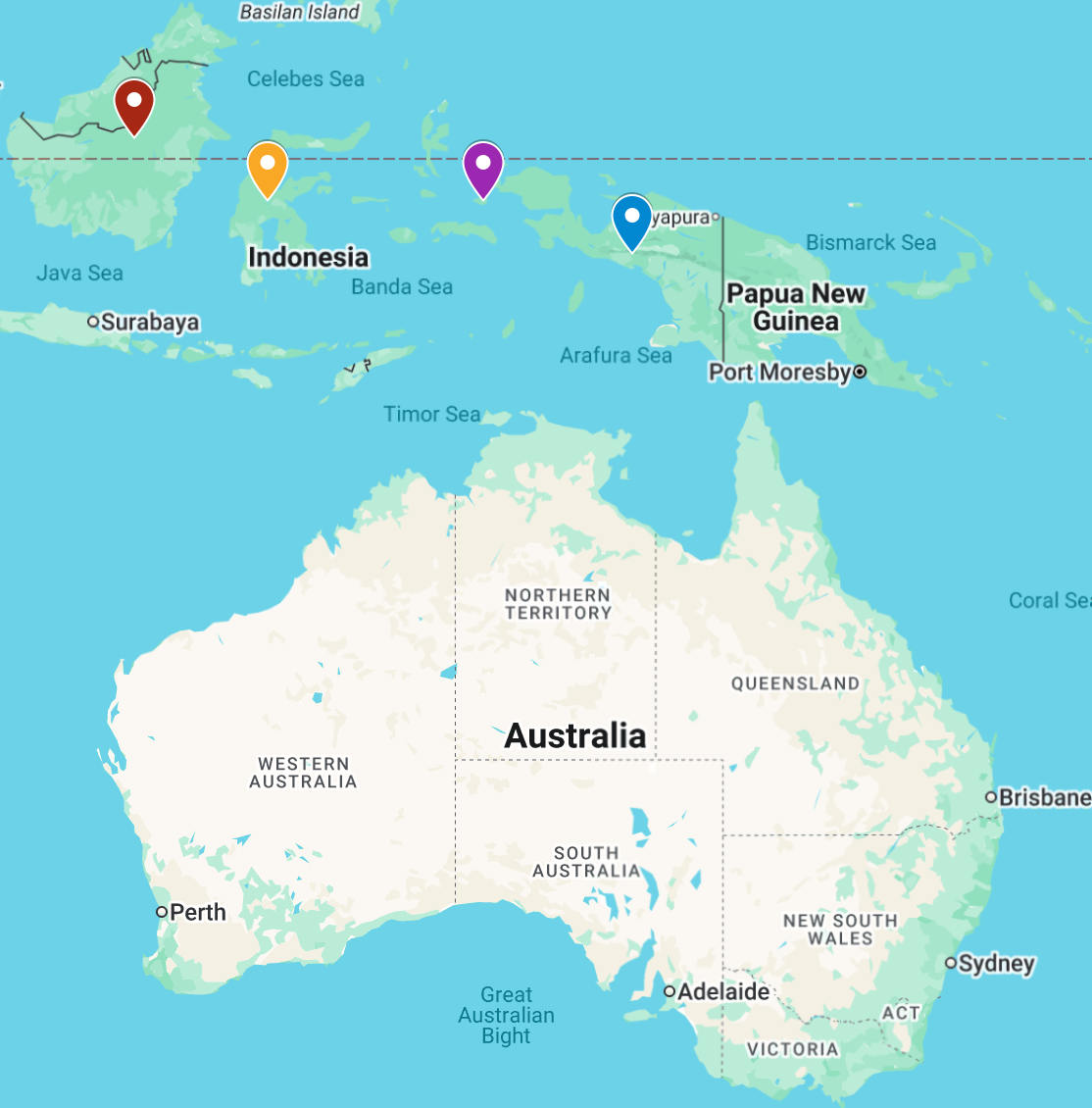
The identification of the oldest rock art in Sulawesi is an important discovery because it adds another data point on the journey humans took to spread across Island Southeast Asia and Australia. As a critical point on the journey to Australia, this discovery supports the suggestion that modern humans reached Australia by sailing a northern route from present-day Borneo to Sulawesi and then through to western Papua (the western half of the island of New Guinea) or the Indonesian island of Misool, the authors wrote in the study.
—World's oldest cave art, including famous hand stencils, being erased by climate change
—Life-size rock art points the way to oldest human inhabitants of Saudi Arabia — and the desert oases they used
—'The images could be much older': Analysis of rocks shows Neanderthals made art at least 64,000 years ago
"This is a stunning discovery," Chris Clarkson, a professor of archaeology also at Griffith University who was not involved in the new research, told Live Science in an email.
He agreed with the conclusion that ancient modern humans are the most likely artists of the hand stencils because the dates align perfectly with when H. sapiens arrived in the region.
"What amazes me most is that these artworks sit directly on a migration route into Australia," he said. What's more, it shows that the first people to populate Australia had rich cultural lives. "The first people to cross Island Southeast Asia and reach Australia weren't just surviving, they were creating art, crossing oceans, and carrying complex symbolic traditions," Clarkson said.
Article SourcesOktaviana, A. A., Joannes-Boyau, R., Hakim, B., et al. Rock art from at least 67,800 years ago in Sulawesi. Nature (2026). https://doi.org/10.1038/s41586-025-09968-y
Human evolution quiz: What do you know about Homo sapiens?
 Sophie BerdugoSocial Links NavigationStaff writer
Sophie is a U.K.-based staff writer at Live Science. She covers a wide range of topics, having previously reported on research spanning from bonobo communication to the first water in the universe. Her work has also appeared in outlets including New Scientist, The Observer and BBC Wildlife, and she was shortlisted for the Association of British Science Writers' 2025 "Newcomer of the Year" award for her freelance work at New Scientist. Before becoming a science journalist, she completed a doctorate in evolutionary anthropology from the University of Oxford, where she spent four years looking at why some chimps are better at using tools than others.
Show More CommentsYou must confirm your public display name before commenting
Please logout and then login again, you will then be prompted to enter your display name.
Logout Read more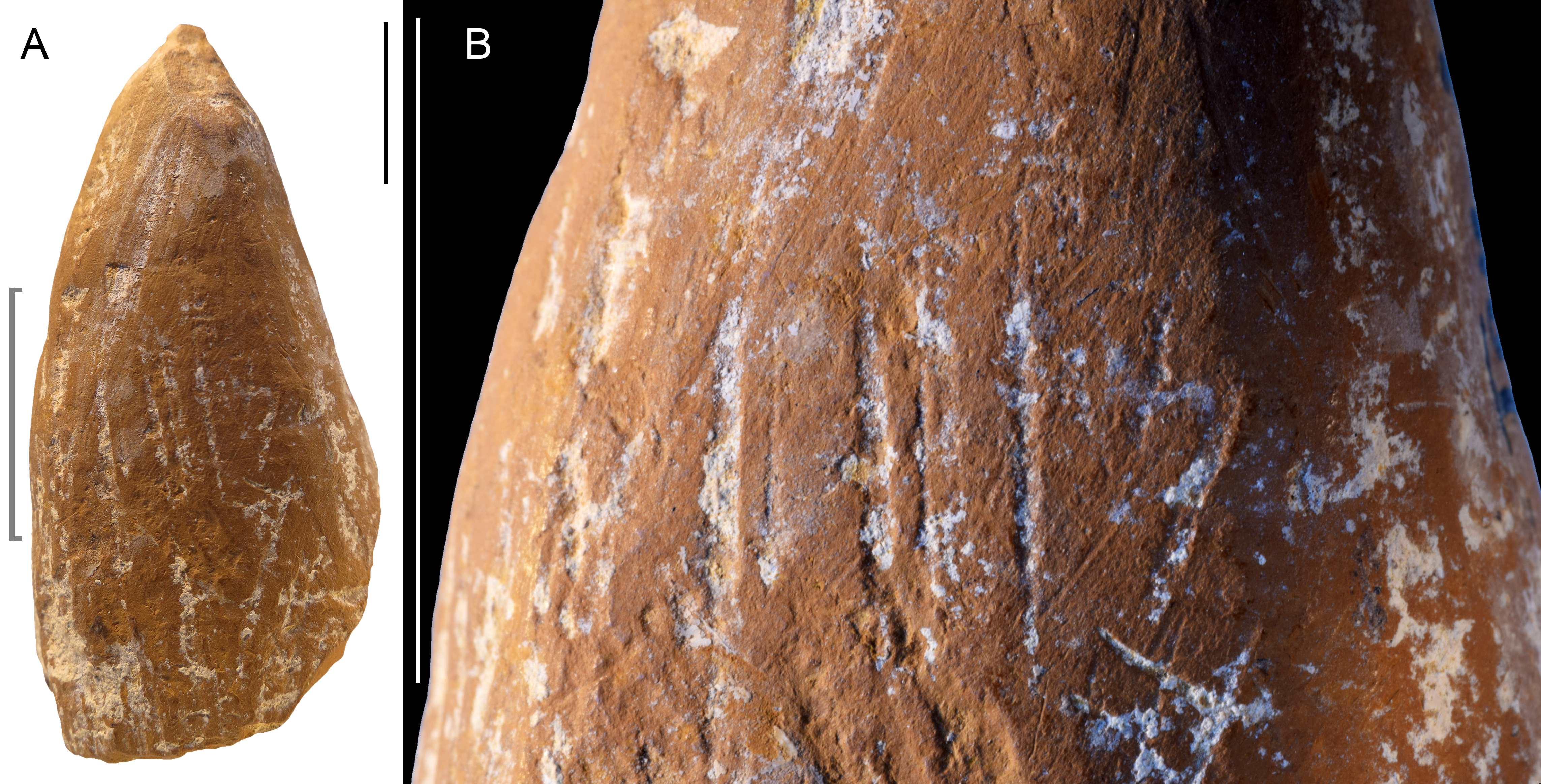 Crimean Stone Age 'crayons' were used by Neanderthals for symbolic drawings, study claims
 'It is the most exciting discovery in my 40-year career': Archaeologists uncover evidence that Neanderthals made fire 400,000 years ago in England
 60,000-year-old poison arrows from South Africa are the oldest poison weapons ever discovered
 480,000-year-old ax sharpener is the oldest known elephant bone tool ever discovered in Europe
 World's oldest rock art, giant reservoir found beneath the East Coast seafloor, black hole revelations, and a record solar radiation storm
 Some of the oldest harpoons ever found reveal Indigenous people in Brazil were hunting whales 5,000 years ago
Latest in Archaeology
Some of the oldest harpoons ever found reveal Indigenous people in Brazil were hunting whales 5,000 years ago
Latest in Archaeology
 2,500 years ago, people in Bulgaria ate dog meat at feasts and as a delicacy, archaeological study finds
480,000-year-old ax sharpener is the oldest known elephant bone tool ever discovered in Europe
2,500 years ago, people in Bulgaria ate dog meat at feasts and as a delicacy, archaeological study finds
480,000-year-old ax sharpener is the oldest known elephant bone tool ever discovered in Europe
 People, not glaciers, transported rocks to Stonehenge, study confirms
Some of the oldest harpoons ever found reveal Indigenous people in Brazil were hunting whales 5,000 years ago
World's oldest rock art, giant reservoir found beneath the East Coast seafloor, black hole revelations, and a record solar radiation storm
People, not glaciers, transported rocks to Stonehenge, study confirms
Some of the oldest harpoons ever found reveal Indigenous people in Brazil were hunting whales 5,000 years ago
World's oldest rock art, giant reservoir found beneath the East Coast seafloor, black hole revelations, and a record solar radiation storm
 5,500-year-old human skeleton discovered in Colombia holds the oldest evidence yet that syphilis came from the Americas
Latest in News
5,500-year-old human skeleton discovered in Colombia holds the oldest evidence yet that syphilis came from the Americas
Latest in News
 How to see 2 total solar eclipses in the next 2 years — including the 'eclipse of the century'
 A drying climate is making East Africa pull apart faster
 James Webb telescope peers into 'Eye of God' and finds clues to life's origins — Space photo of the week
 'Pain sponge' derived from stem cells could soak up pain signals before they reach the brain
 An ocean the size of the Arctic once covered half of Mars, new images hint
 Arctic blast probably won't cause trees to explode in the cold — but here's what happens if and when they do go boom
LATEST ARTICLES
Arctic blast probably won't cause trees to explode in the cold — but here's what happens if and when they do go boom
LATEST ARTICLES 1Antibiotic resistance is the 'silent pandemic' — here are four steps to stop it
- 2How to see 2 total solar eclipses in the next 2 years — including the 'eclipse of the century'
- 3 A drying climate is making East Africa pull apart faster
- 4Google Glass has found yet another lease of life — but is it too little too late for smart glasses?
- 5James Webb telescope peers into 'Eye of God' and finds clues to life's origins — Space photo of the week