
- Health
Combining small improvements to several areas of well-being could lead to bigger health gains than improving just one in isolation, a new study suggests.
When you purchase through links on our site, we may earn an affiliate commission. Here’s how it works.
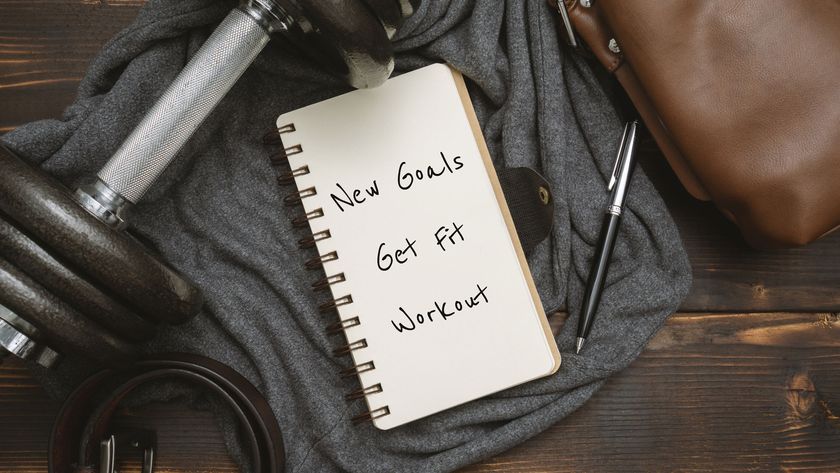
 A new study suggests that making small improvements across your sleep, diet and exercise habits could add up to significant improvements in lifespan.
(Image credit: Lu ShaoJi/Getty Images)
Share
Share by:
A new study suggests that making small improvements across your sleep, diet and exercise habits could add up to significant improvements in lifespan.
(Image credit: Lu ShaoJi/Getty Images)
Share
Share by:
- Copy link
- X
Small changes in exercise, sleep and dietary habits could do wonders for people's health and possibly extend their overall lifespan, a large U.K. study suggests.
The research, published Jan. 13 in the journal eClinicalMedicine, sought to find the smallest possible lifestyle improvements that could measurably lengthen people's lifespans. The researchers searched within data collected from almost 60,000 people in the UK Biobank cohort, a repository of medical and lifestyle data from hundreds of thousands of U.K. adults.
The team linked the participants' documented habits to their theoretical overall longevity and health, as calculated using statistical modelling. They found that people who slept as little as five extra minutes daily, engaged in just two extra minutes of moderate-to-vigorous physical activity per day, and added a half serving of vegetables per day tended to live significantly longer than the worst performers — meaning those whose sleep habits, exercise, and nutrition patterns put them in the bottom 5% of the overall cohort.
You may like-
 6 tips to kickstart your exercise routine and actually stick to it, according to science
-
 Brain benefits of exercise come from the bloodstream — and they may be transferrable, mouse study finds
-
 It matters what time of day you get cancer treatment, study suggests
The former group had an extra year of overall lifespan compared with the latter, according to the statistical model.
That's not to say that adding a few minutes of exercise or sleep and making small changes to diet will guarantee an extra year of life, Stephen Burgess, a statistician at the University of Cambridge who was not involved in the study, told Live Science in an email.
"By itself, this study does not prove that these habits improve health," he cautioned. "They model what might happen to our life span if changing these factors does improve health."
Interestingly, the data suggested that improvements across several aspects of well-being are "greater than the sum of their parts," lead study author Nicholas Koemel, a dietitian and research fellow at The University of Sydney, told Live Science. For instance, to gain one additional year of lifespan through sleep alone, the study suggested a person would have to sleep an extra 25 minutes per night — a luxury many cannot afford. But very small improvements in sleep, exercise and diet may have a significant combined effect.
Sign up for the Live Science daily newsletter nowContact me with news and offers from other Future brandsReceive email from us on behalf of our trusted partners or sponsorsBy submitting your information you agree to the Terms & Conditions and Privacy Policy and are aged 16 or over.Koemel said the findings suggest that "healthy habits work better as a package."
"Each one of our behaviors has an interlinking impact on what we do," he said. "If we have a poor night's sleep, we oftentimes eat differently, we move differently. And we see that across all of these different behaviors."
Per the model, the study participants with the most optimal combination of these behaviors — at least 40 minutes of moderate-to-vigorous exercise, seven to eight hours of sleep per day, and an overall healthy diet — were predicted to live an extra nine years, overall, and live nine extra years in good health, compared with the poorest 3% of performers.
You may like-
6 tips to kickstart your exercise routine and actually stick to it, according to science
-
Brain benefits of exercise come from the bloodstream — and they may be transferrable, mouse study finds
-
It matters what time of day you get cancer treatment, study suggests
By their very design, studies like these, known as cohort studies, need to be taken with a grain of salt. They compare two groups retroactively rather than asking people to change their habits and seeing how that change affects their health. As such, they can never conclusively prove that one particular change caused an associated effect; they can only draw a link between the two.
For instance, sleep and exercise habits were measured for only up to a week in the UK Biobank cohort, and the data assume that people kept up those same habits in the long run. Similarly, diet was assessed only at the beginning of the study, rather than monitored over time. So it's possible that the participants changed their habits after these assessments were taken, which would weaken the possibility that their habits improved their lifespan.
All of this leaves room for the possibility that it was not these lifestyle differences, but rather some other factor that wasn't measured, that caused the improvement in lifespan.
RELATED STORIES—Life expectancy is increasing at a slower rate this century
—We're nowhere near reaching the maximum human life span, controversial study suggests
—Extreme longevity: The secret to living longer may be hiding with nuns... and jellyfish
It may be, for instance, that one group is wealthier, and it so happens that this makes it easier for that group to exercise, sleep well and eat well. But ultimately, that difference is partially explained by the wealth, not only the behaviors, Burgess explained. It is also possible wealthy people might live in a less polluted area than poorer people, which could contribute to the difference in lifespan. There's no way of telling from this study alone.
"The overall message that small changes in these factors are likely to be beneficial is probably correct," Burgess said. "But whether the exact numbers are accurate or not is less clear."
Koemel agreed, saying that more research is needed to confirm the findings. Still, the idea that even tiny changes in lifestyle could have large effects could offer an interesting alternative for those looking to improve their overall well-being, he suggested.
"New Year's resolutions oftentimes fail because we're pushing too hard," he argued. "We're trying to go to the gym every day. We're trying to be perfect." This research suggests there may be a "different path to get from A to Z," by making smaller changes across several areas of well-being that can build up to healthier habits while improving overall health.
DisclaimerThis article is for informational purposes only and is not meant to offer medical advice.
 Marianne GuenotLive Science Contributor
Marianne is a freelance science journalist specializing in health, space, and tech. She particularly likes writing about obesity, neurology, and infectious diseases, but also loves digging into the business of science and tech. Marianne was previously a news editor at The Lancet and Nature Medicine and the U.K. science reporter for Business Insider. Before becoming a writer, Marianne was a scientist studying how the body fights infections from malaria parasites and gut bacteria.
Show More CommentsYou must confirm your public display name before commenting
Please logout and then login again, you will then be prompted to enter your display name.
Logout Read more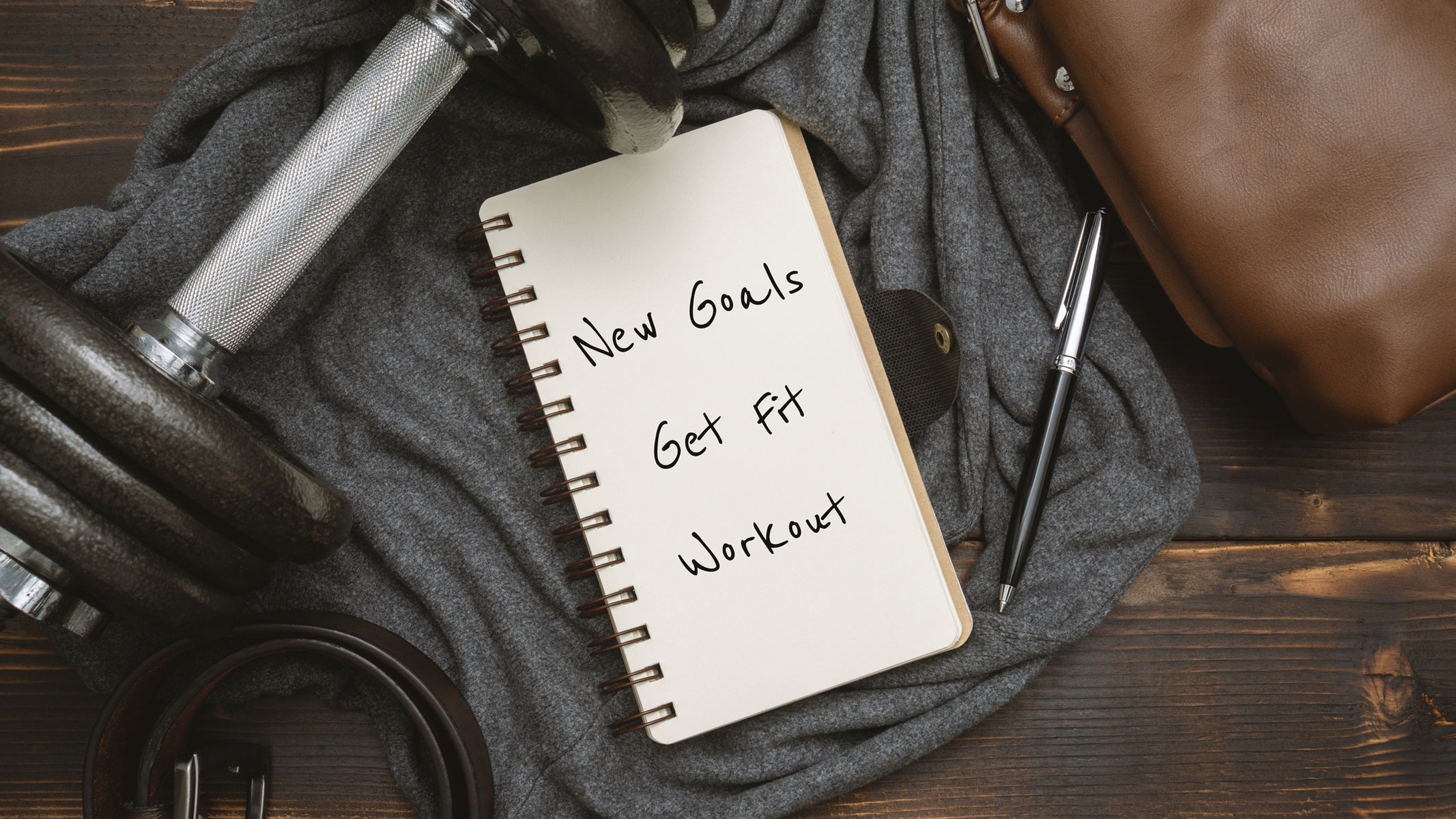 6 tips to kickstart your exercise routine and actually stick to it, according to science
 Brain benefits of exercise come from the bloodstream — and they may be transferrable, mouse study finds
 It matters what time of day you get cancer treatment, study suggests
 Slaying 'zombie cells' in blood vessels could be key to treating diabetes, early study finds
 Insomnia and anxiety come with a weaker immune system — a new study starts to unravel why
 Has America's obesity rate plateaued?
Latest in Health
Has America's obesity rate plateaued?
Latest in Health
 'Pain sponge' derived from stem cells could soak up pain signals before they reach the brain
 Wegovy now comes in pill form — here's how it works
 Lab mice that 'touch grass' are less anxious — and that highlights a big problem in rodent research
 Early research hints at why women experience more severe gut pain than men do
 Color blindness linked to lower bladder cancer survival, early study hints
 Why is flu season so bad this year?
Latest in News
Why is flu season so bad this year?
Latest in News
 Some of the oldest harpoons ever found reveal Indigenous people in Brazil were hunting whales 5,000 years ago
 An ocean the size of the Arctic once covered half of Mars, new images hint
 Arctic blast probably won't cause trees to explode in the cold — but here's what happens if and when they do go boom
 'Earthquake on a chip' uses 'phonon' lasers to make mobile devices more efficient
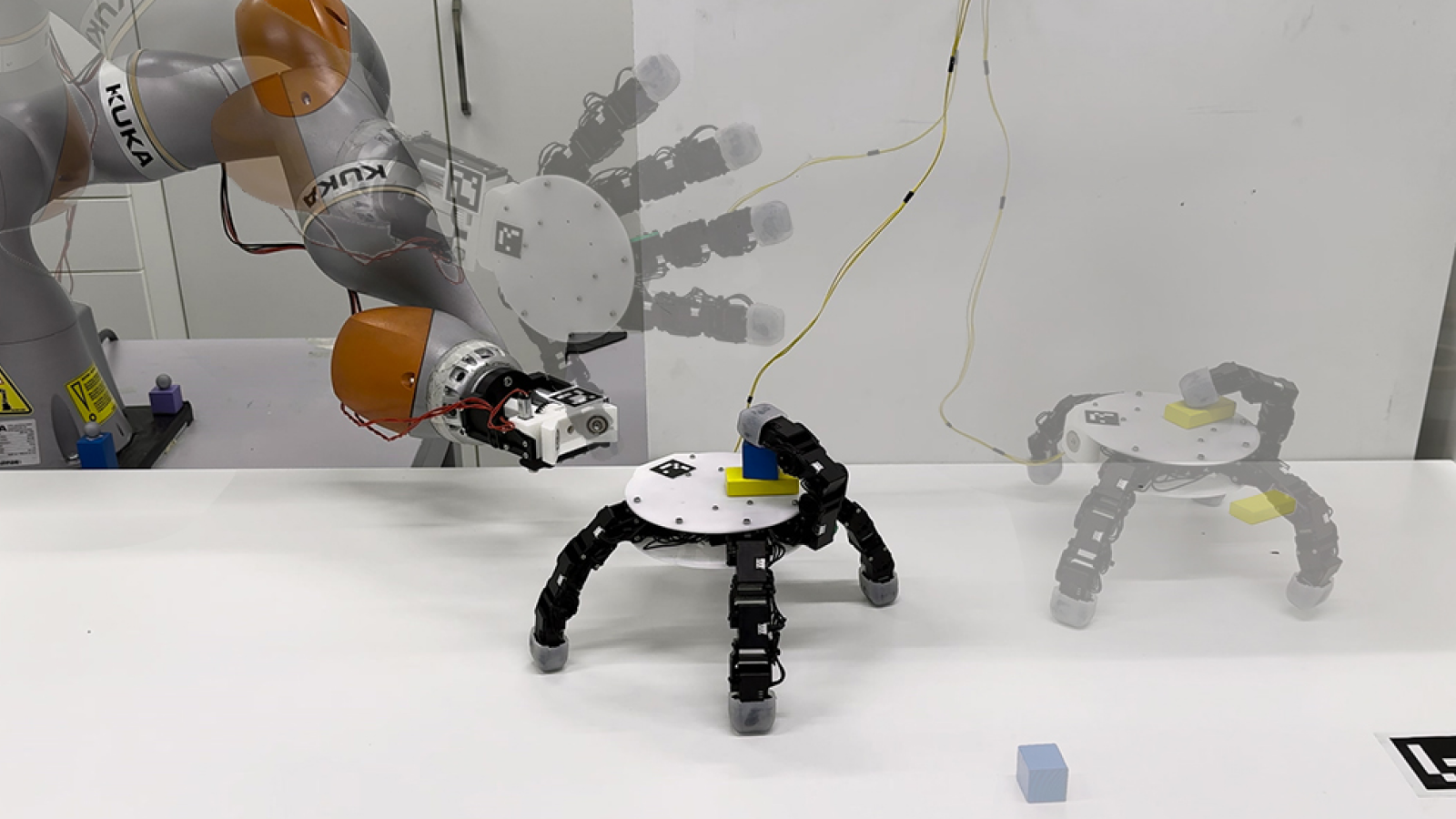 Creepy robotic hand detaches at the wrist before scurrying away to collect objects
 Dark matter and neutrinos may interact, hinting at 'fundamental breakthrough' in particle physics
LATEST ARTICLES
Dark matter and neutrinos may interact, hinting at 'fundamental breakthrough' in particle physics
LATEST ARTICLES- 1Some of the oldest harpoons ever found reveal Indigenous people in Brazil were hunting whales 5,000 years ago
- 2'A real revolution': The James Webb telescope is upending our understanding of the biggest, oldest black holes in the universe
- 3'Earthquake on a chip' uses 'phonon' lasers to make mobile devices more efficient
- 4Chocolate Hills: The color-changing mounds in the Philippines that inspired legends of mud-slinging giants
- 5How to choose the best dehumidifier for your home this season