- Health
- Mind
- Neuroscience
Scientists are developing a "sponge" that can soak up pain signals in the body before they reach the brain, potentially offering an alternative to painkillers.
When you purchase through links on our site, we may earn an affiliate commission. Here’s how it works.
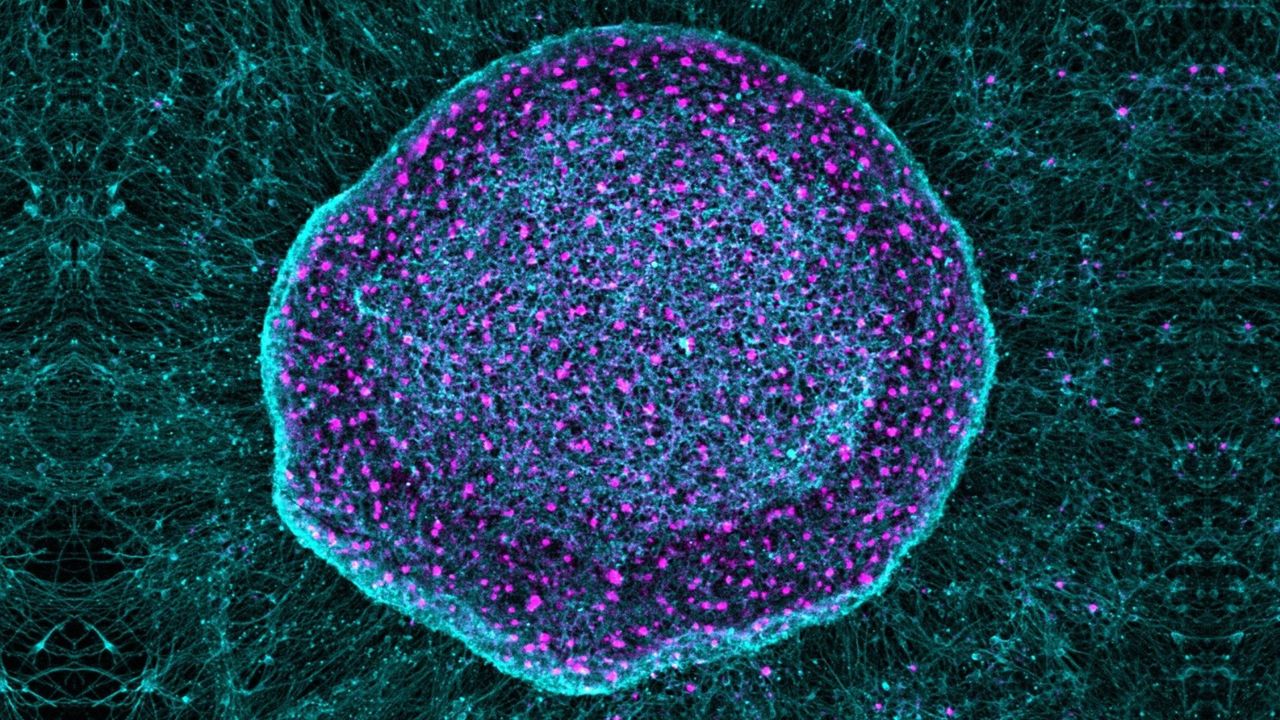
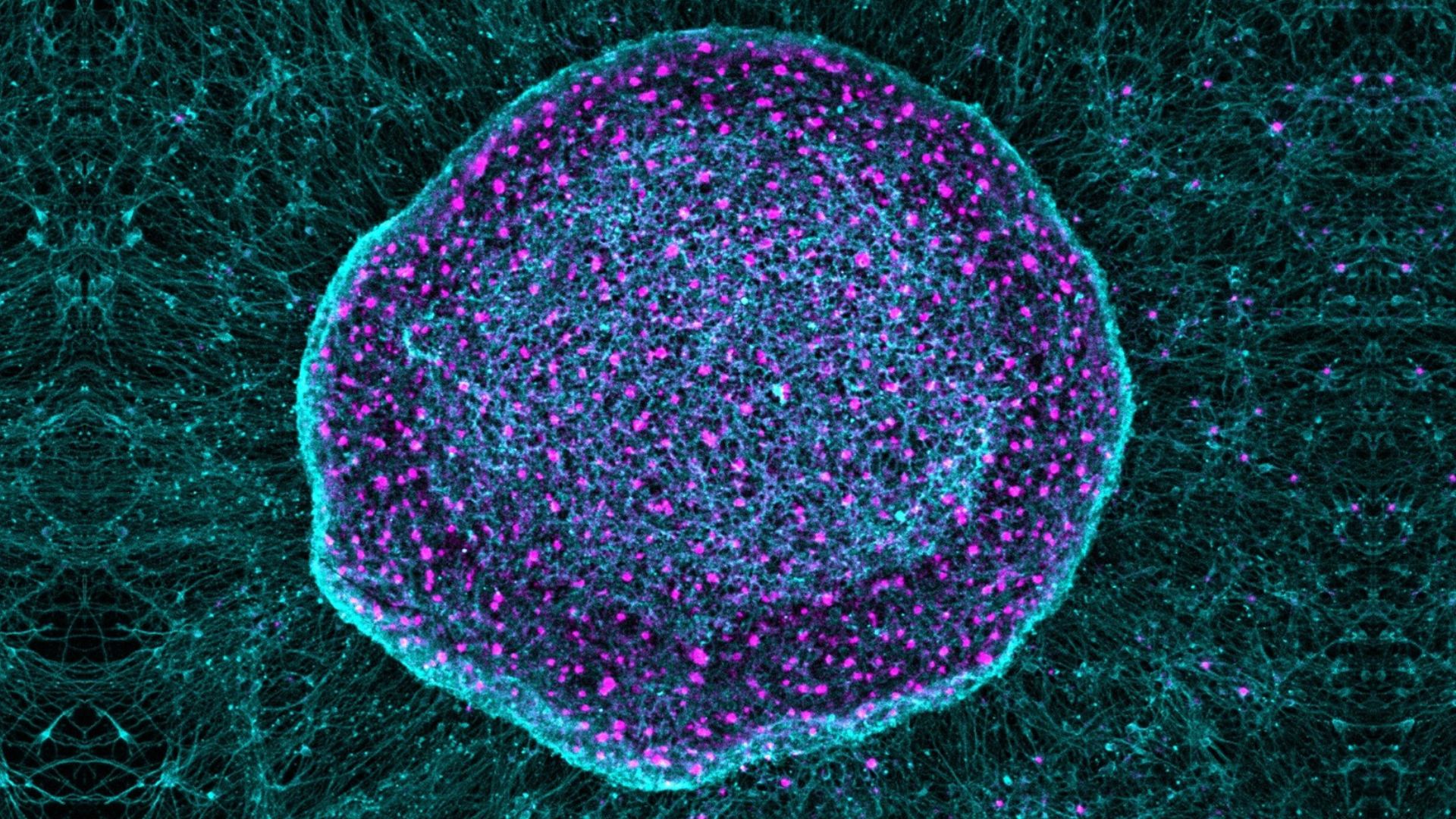 This microscopy image shows pain-sensing neurons derived from stem cells. These cells form the basis of a new "pain sponge" that sequesters inflammatory pain signals and halts cartilage degeneration in mice with arthritis.
(Image credit: SereNeuro Therapeutics)
Share
Share by:
This microscopy image shows pain-sensing neurons derived from stem cells. These cells form the basis of a new "pain sponge" that sequesters inflammatory pain signals and halts cartilage degeneration in mice with arthritis.
(Image credit: SereNeuro Therapeutics)
Share
Share by:
- Copy link
- X
An experimental treatment uses specialized neurons derived from stem cells to "soak up" triggers of pain and inflammation in the arthritic knees of mice.
This lab-mouse experiment suggests the therapy could potentially help with chronic pain in people, caused by conditions like osteoarthritis, for example. The hope is that the "pain sponge" could enable patients to stop relying on opioid medications for pain relief, the researchers say.
You may like-
 'Mitochondrial transfer' into nerves could relieve chronic pain, early study hints
-
 A fentanyl vaccine enters human trials in 2026 — here's how it works
-
 New drug could prevent diabetes complications not fixed with blood sugar control, study hints
"The possibility that the therapy could both relieve pain and slow cartilage degeneration is particularly compelling for osteoarthritis," Chuan-Ju Liu, an orthopedics professor at Yale University who wasn't involved in the study, told Live Science.
How the pain sponge works
The therapy, known as SN101, uses human pluripotent stem cells (hPSC), which can differentiate into any type of cell in the body. In the study, led by Gabsang Lee, a neurology professor at the Johns Hopkins School of Medicine, researchers engineered the hPSC to differentiate into specialized sensory neurons.
These neurons effectively worked as a sponge for inflammatory pain signals. They sequestered the signals before they could be transmitted to the brain and cause pain.
Theoretically, the therapy could work for any kind of chronic pain, said Daniel Saragnese, co-founder of SereNeuro Therapeutics, the biotech company developing SN101. That said, the researchers have so far tested its effectiveness for only osteoarthritis, the most common form of arthritis.
Sign up for the Live Science daily newsletter nowContact me with news and offers from other Future brandsReceive email from us on behalf of our trusted partners or sponsorsBy submitting your information you agree to the Terms & Conditions and Privacy Policy and are aged 16 or over.The degenerative condition is characterized by inflammation and chronic pain that affects the joints, mainly the hips, knees, lower back and neck. It causes pain and stiffness, as well as inflammation driven by the breakdown of bone, cartilage and other tissues. There is no cure.
Currently, osteoarthritis symptoms are managed with lifestyle changes, including physical therapy, and various pain relievers, such as over-the-counter and topical painkillers, opioids, and steroid injections.
In the context of neurodegenerative diseases — such as multiple sclerosis, Alzheimer's disease, and Parkinson's disease — scientists have been working on using hPSCs to replace or repair damaged neurons. With SN101, though, the researchers are taking an alternative approach. The new hPSC-derived neurons are injected at the site of inflammation and exist alongside other pain-sensing neurons, rather than replacing them.
You may like-
'Mitochondrial transfer' into nerves could relieve chronic pain, early study hints
-
A fentanyl vaccine enters human trials in 2026 — here's how it works
-
New drug could prevent diabetes complications not fixed with blood sugar control, study hints
The new neurons serve as biological decoys, binding nearby inflammatory factors before they can be picked up by the body's original neurons.
Potential pros of SN101
Chronic pain, which is defined as pain that lasts three months or more, is often managed with opioid drugs that bind to receptors in the body to reduce the intensity of pain. However, opioids cause unwanted side effects, such as nausea and vomiting, and carry a risk of addiction.
Despite their downsides, it is estimated that about 9% of patients with knee osteoarthritis turn to opioids, which can lead to excessive, long-term use. As such, scientists are always on the lookout for safer and more efficient pain-management techniques.
By using biologically complex cells that naturally express multiple pain receptors, SN101 may more closely reflect the way pain and inflammation manifest in living tissues, Liu said. This could help snuff out pain at its source. Opioids, on the other hand, bind to receptors in the brain to temporarily block painful sensations, so they don't get at the signals at the root of pain.
"However, this work remains at a preclinical stage," Liu emphasized.
The research will need to pass significant milestones before human use, including formal toxicology studies, long-term safety assessments, and first-in-human clinical trials, he said. Nonetheless, he called the idea behind the therapy "innovative."
related stories—'Breakthrough' stem-cell patches stabilized woman's heart as she awaited transplant
—Human knees kind of suck — here's why we haven't evolved better ones
—Brain signals underlying chronic pain could be 'short-circuited,' study suggests
The researchers pointed out several limitations in their recent study that would need investigation before SN101 could be deemed safe for humans. One is the treatment's immunogenicity — that is, whether it triggers a harmful immune response in the body. Another limitation is that human and mouse knee joints are very different, so some results from the arthritic mouse study might not translate to people.
"Human joints are larger [than mouse joints], more mechanically complex, and subject to decades of cumulative stress," Liu noted. Additionally, "pain processing and immune-neuronal interactions can differ substantially between mice and humans, which may affect both therapeutic efficacy and durability."
Article SourcesEctopic engraftment of nociceptive neurons derived from hPSCs for pain relief and joint homeostasis. Zhuolun Wang, Weixin Zhang, Ju Wang, Zhiping Wu, Xu Cao, Junmin Peng, Gabsang Lee, Xinzhong Dong. bioRxiv 2025.12.16.694733; doi: https://doi.org/10.64898/2025.12.16.694733
 Payal DharLive Science Contributor
Payal Dhar (she/they) is a freelance journalist, writing on science, technology, and society. They cover AI, engineering, materials science, cybersecurity, space, games, online communities, and any shiny new technology that catches their eye. She has written for Science News, Scientific American, Nature, Washington Post, Guardian, Chemical & Engineering News, IEEE Spectrum, and others. They also write science-fiction and fantasty. You can follow her @payaldhar.bluesky.social or read her work at payaldhar.contently.com.
Show More CommentsYou must confirm your public display name before commenting
Please logout and then login again, you will then be prompted to enter your display name.
Logout Read more 'Mitochondrial transfer' into nerves could relieve chronic pain, early study hints
 A fentanyl vaccine enters human trials in 2026 — here's how it works
 New drug could prevent diabetes complications not fixed with blood sugar control, study hints
 'Zombie' cells may drive common form of epilepsy
 Tiny implant 'speaks' to the brain with LED light
 Injecting anesthetic into a 'lazy eye' may correct it, early study suggests
Latest in Neuroscience
'Zombie' cells may drive common form of epilepsy
'Mitochondrial transfer' into nerves could relieve chronic pain, early study hints
Tiny implant 'speaks' to the brain with LED light
Injecting anesthetic into a 'lazy eye' may correct it, early study suggests
Latest in Neuroscience
'Zombie' cells may drive common form of epilepsy
'Mitochondrial transfer' into nerves could relieve chronic pain, early study hints
Tiny implant 'speaks' to the brain with LED light
 Neuroscience word search — Find all the parts of the brain
 Brain scans reveal 'dial' that helps keep us from getting lost
 'Intelligence comes at a price, and for many species, the benefits just aren't worth it': A neuroscientist's take on how human intellect evolved
Latest in News
'Pain sponge' derived from stem cells could soak up pain signals before they reach the brain
'Intelligence comes at a price, and for many species, the benefits just aren't worth it': A neuroscientist's take on how human intellect evolved
Latest in News
'Pain sponge' derived from stem cells could soak up pain signals before they reach the brain
 Arctic blast will bring 'life-threatening' temperatures and dump snow on 150 million Americans. But will it make the trees explode?
 Wegovy now comes in pill form — here's how it works
 Creepy robotic hand detaches at the wrist before scurrying away to collect objects
 Dark matter and neutrinos may interact, hinting at 'fundamental breakthrough' in particle physics
 5,500-year-old human skeleton discovered in Colombia holds the oldest evidence yet that syphilis came from the Americas
LATEST ARTICLES
5,500-year-old human skeleton discovered in Colombia holds the oldest evidence yet that syphilis came from the Americas
LATEST ARTICLES- 1Arctic blast will bring 'life-threatening' temperatures and dump snow on 150 million Americans. But will it make the trees explode?
- 25,500-year-old human skeleton discovered in Colombia holds the oldest evidence yet that syphilis came from the Americas
- 3Wegovy now comes in pill form — here's how it works
- 4Creepy robotic hand detaches at the wrist before scurrying away to collect objects
- 56 tips to kickstart your exercise routine and actually stick to it, according to science